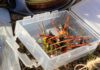
Most anglers never think about where their flies actually come from or how an idea turns into something hanging on a fly shop wall. In this episode, Jesse Riding of Rainy’s Flies takes us behind the scenes of commercial fly tying—from a small home operation started by his mother to one of the largest fly production companies in the world.
We dig into how flies are designed, how patterns move into large-scale production, and why materials like foam changed modern fly fishing forever. Jesse also shares insights on fly design royalties, innovation ethics, and what really determines quality when flies are tied across the globe.
Episode Transcript
00;00;02;00 – 00;00;22;22 Dave Most people grow up around the smell of cookies or Sunday dinner. Today’s guest grew up around head, cement and deer hair. Boxes of flies on the kitchen table, strangers knocking on the door to pick up some orders. A mother building a fly time business from scratch in a spare bedroom, and eventually running a fly shop that would help shape warm water and commercial flight tying for decades. 00;00;23;06 – 00;00;41;08 Dave This is the Wi-Fi Swing podcast, right? Show you the best places to travel to for fly fishing, how to find the best resources and tools to prepare for that big trip, and what you can do to give back to the fish species we all love. Jesse Writing is here today to take us into his life and how he came to run the operation at Rainey’s Flies. 00;00;41;08 – 00;01;00;07 Dave We’re going to find out what happens when production moved to Thailand. Are we going to get the whole background here and how it started from the house? They moved to Austin with a connection to three M to find out how they maintain quality and scale their business and how materials like foam change the way commercial flies are built and fished. 00;01;00;23 – 00;01;21;10 Dave We also talk about royalties, intellectual property, the ethics behind famous patterns, and how to respect the originators in the industry. There’s a good one. We’re going to get the backstory on all this, plus a great story and a great company. Here we go. Jesse writing. You find him at Rainey’s Flies Tor.com. How are you doing, Jesse? 00;01;21;20 – 00;01;27;14 Jesse I’m great. Great. It’s. It’s great to be here with him. I’m somewhat honored, you know, So that’ll be fantastic. 00;01;27;22 – 00;01;46;22 Dave That’s great to hear. Yeah, it’s been a little while since we talked. I mean, we’ve talked about Rainey’s flies, you know, over the years quite a bit. But your. Your mom was on the podcast in 20. It was 2019 somewhere there. And we got a good background, but that was a little bit ago. So we’re going to probably do a recap and circle back around on what’s been new with Rainey’s and everything. 00;01;46;22 – 00;01;53;12 Dave And in just your background. So yeah, first off, what’s happening with you? What part of the country are you at right now? Oh yeah, that’s. 00;01;53;12 – 00;02;11;09 Jesse A good question. I do find myself all over the place. I actually just barely got back from Thailand, where our tie in facility is. We own and operate our own factory over there. So I spent about six weeks over there at probably the most perfect time to be there where it’s, you know, lows in the fifties and highs in the eighties and sunny every day. 00;02;11;09 – 00;02;29;25 Jesse So it was a good time to be over there rather than the hot, sticky, rainy mess that it can be. So I just got back from that and I’ll be in the Logan office for the next several months. I will be going back and forth, you know, that’s kind of my typical M.O. once or twice a year to go back and forth between Thailand. 00;02;29;25 – 00;02;41;29 Jesse And then I spend about 12 weeks of the year on the road visiting dealers with with our full time sales reps. So but yeah, I’m in I’m in northern Utah as we speak for a month or two. 00;02;42;05 – 00;02;51;07 Dave Yeah. And so you’re on the road quite a bit. What’s Thailand for those that haven’t been there, what is great about that place, You know what’s unique? It must be a pretty amazing place to be. 00;02;51;16 – 00;03;23;07 Jesse Sure, sure. So there’s obviously it’s a there’s some challenges running an international business, the first being that it’s completely opposite schedule. Currently, there are about 13 or 14 hours ahead of us. So night as day and day as night and traveling back and forth gives you some major jetlag, of course. But but just communicating, you know, like you will work a full day and then you have to spend an hour, you know, on the phone or or whatever it is at your night or that or your morning to try to, you know, catch them at the same time to manage it effectively. 00;03;23;18 – 00;03;53;06 Jesse The people themselves are wonderful. This is and, you know, Southeast Asia, I think Thailand is very different than other Asian cultures. It’s very different. And it’s the people are very different. It’s so interesting to have such a you know, it’s like a state like California and Texas, you know, and but but having them speak different languages act differently and have different customs is the craziest concept for us here in America to think about these countries that whether it’s Europe or we’re in Asia and how different they are from each other. 00;03;53;06 – 00;04;17;17 Jesse But it’s a wonderful culture, wonderful people. They drive on the opposite side of the road. So that’s kind of a challenge, right? And of course, it’s kind of chaotic. But, you know, I enjoy Thailand. I’ve been over there many times. This last trip was the funnest I’d ever I’d ever had. It was just like I said, probably coupled with the good weather and the the all of the different projects and things that I was able to accomplish. 00;04;17;17 – 00;04;42;19 Jesse So it was was a lot of fun. I enjoy it. I suppose if you are going to be anywhere, that’s that’s not a bad place to be. And couple that with not a lot of people don’t know this, but Thailand specifically, that’s how we get our high quality flights there are countries all over the world that Thai flies, but the reason we’re in Thailand is because their attention to detail, it’s part of their culture. 00;04;42;19 – 00;05;00;19 Jesse If you look at their craft in fact, this is a good test and maybe we can you know, we’ll elaborate this later. But, you know, when you go there as a tourist, for example, or any country is tourism, you go to the little flea markets for wherever it is that you buy the little gadgets for tourist stuff. You can look at the what’s made there. 00;05;00;29 – 00;05;20;14 Jesse And there’s no question that when you’re in Thailand, the things that they make are just heads above any other type of little souvenir that you could ever get. And it just goes back to their culture of attention to detail and really elaborate stuff. So and we were the ones that that first went over to Thailand and started to fly Thailand factory. 00;05;20;14 – 00;05;42;25 Jesse That was Dennis Black back in the fifties or sixties. But he figured it out then too, and we figured it out when we went over the same thing. That man you can they really can take a high quality fly and they’re good at duplication, unlike any other country. So that’s that’s one of the reasons we’re there and stay is because of how attention or the quality that we can get out of there. 00;05;42;25 – 00;05;44;24 Jesse And that’s one of our core values is quality. 00;05;44;24 – 00;05;53;17 Dave So yeah, right, right. When you’re over there, what is your six weeks look like? What are you doing over there? You getting some time? You know, Is it all behind the vise? But describe the hell of it. 00;05;53;25 – 00;06;18;29 Jesse Oh, yes, sure. So from a managerial standpoint, it’s different this time. And every time, you know, it’s slightly different. I’ll have these surprised X like, for example, we’re launching some new flights. So this time it included, you know, training on some new patterns and just making sure they’re tied to the proper specifications and stuff, as well as some new material ideas that I was having them make and some new procedures of that. 00;06;18;29 – 00;06;36;27 Jesse But generally speaking, it’s just like managing any corporation or business. You’re there to oversee things, to make things sure things are running properly, to help out where you can. You’ll notice little things that are being done that are better than you ever imagined. Just say, Wow, you guys started doing that. When did you do that? And I just will say, Hey, we thought this was a better way to do it. 00;06;36;27 – 00;06;50;10 Jesse You’re like, Oh, it totally is. Wow. Fantastic. You know, in other things, they’re doing something with multiple steps and you’re like, I don’t think we need to do that. Why are you doing that? And they’re like, Well, we thought we needed to do it this way because of this. No, no, no, no, no. Let’s cut that out. 00;06;50;10 – 00;06;51;09 Dave So, yeah. 00;06;51;19 – 00;07;15;27 Jesse It like I said, you know, it’s wonderful to be in the fly fishing business when it’s your hobby. It’s just an amazing experience and an opportunity. But there are very similar business related things that you do that that happen with any business and the challenges and the growing pains or whatever. It is so good. But every day you show up there and I have an office, but I’m out on the town for looking at what they’re doing. 00;07;15;27 – 00;07;31;17 Jesse I’m helping out with stock issues, you know, whether or not something needs to be ordered or not. I’m in the dayroom, you know, like saying, you know, is this the right color for this? And and they’ll save up things. Right? They’ll save up a lot of issues. So when you show up, they’re like, oh, we have like ten things we need to talk to you about. 00;07;31;17 – 00;07;48;08 Jesse And you’re like, Oh, man, we could have done this over the phone and it would have been not a problem. Right, right, right. So, but yeah, that’s, that’s what to do. And then we, we were kind of a typical day, you know, somewhere between eight and five or six. And then we go home and eat and come back and do the same thing five days a week. 00;07;48;15 – 00;08;03;08 Dave Yeah. Just work for six weeks. Yeah, you’re there. We work. That’s awesome. You know, we had this. We’ll put a link in the show notes. I think it was episode 114 that we did a while back. But take us back because it’s been a little while. How did the trainees get started? What is the story there? 00;08;03;18 – 00;08;26;02 Jesse Sure, sure. Yeah, that’s a I’ll try to be brief. It’s a long story, I suppose, but. But yeah. So the business and the company was started by Randy writing. Who’s Mom? That’s my mom. So? So she started it in 1971 officially, but in the in 69 and 70, she graduated high school. She grew up in in eastern Utah or the U.S. based in areas you’re familiar with, with that area. 00;08;26;17 – 00;08;43;06 Jesse And she grew up on a farm. So she grew up, you know, tomboy, you know, milking cows and doing all of the farm work with her brothers and everything. And so fishing was definitely one of those things that you did whenever you could. You’d fished the local creeks or whatever you could. So she that’s that was her background. 00;08;43;06 – 00;09;04;12 Jesse She grew up as one of the boys. When she graduated high school, she got a job at what is the Utah State University extension office there. So, you know, universities have have offices in rural areas to teach a few classes to people trying to continue their education or whatnot. And she was the secretary for the the dean or the guy that that head up that that extension office. 00;09;04;22 – 00;09;21;01 Jesse And he got the bright idea to do that. His name is Art Jones. There is Art Jones. I think he’s still living, but he got the idea to do an accredited fly tying class, which was just kind of coming on the scene. Right? You know, this is in the seventies and people have been time flies for for a while, but not overly mainstream. 00;09;21;13 – 00;09;37;10 Jesse And and he got permission to do so. And there’s like 30 people that signed up for the class. And if you ever thought to fly time class, you cannot teach 30 people that’s that you have to have like maybe eight or ten lunch around you and you demonstrate and then they do it and you go in and help them. 00;09;37;10 – 00;09;56;19 Jesse So 30 was way too much. So he went to his secretary and said, I need you to help me. I’m going to teach you the pattern before you’re going to teach half the class. I’m going to teach after class. And long story short, it just stuck to her. She loved it. She taught that class and she tied better than him, you know, She just really liked it, Thought it was really cool. 00;09;56;19 – 00;10;15;03 Jesse She knew a little bit about it. You know, people had been fishing flies for a while, so she knew what flies and fly fishing was, albeit still in its, you know, technological infancy. So she started doing that. But what happened quickly is that people would come to her and they’d say, Hey, can you tie this for me? You can tie this for me, because they didn’t want to do it. 00;10;15;15 – 00;10;33;26 Jesse And so she’s like, Well, yeah, but it’ll it’ll cost this. And so she kind of saw it as a side hustle or what we call a side hustle today, which is it’s like, Oh man, I can make some side money by doing this. And eventually she got the bright idea. She, she bought a magazine. I don’t even know which one it was some outdoor magazine or fly fishing magazine. 00;10;34;07 – 00;10;48;13 Jesse And in the back, you remember the ads that used to be and in all kinds of magazines. And it was an ad for Raymond Roth for someone to tie a bunch of mother minnows that was like 300 dozen. And they wanted him in like three months. And so she called them and they said, Yeah, if you can do it. 00;10;48;13 – 00;11;04;20 Jesse And so she tied 300 dozen mother minnows over a couple of months and sent them off to them and got a check back. That’s when, you know, the light bulb went off and said, Oh, this is I can do this as a product what we now call is, you know, a commercial or a production tire. Right? So and that was the start. 00;11;04;20 – 00;11;26;16 Jesse And then my parents got married. And again, she just opened up a little spot in the the typical extra bedroom office area and tide flies and eventually people kept ringing our doorbell and coming by. And we’d they’d come in and go through our house into that little bedroom and pick out some flies that she had tied, you know, over the weeks and buy them for. 00;11;26;16 – 00;11;32;20 Jesse Which is really funny because the price there, I remember them to this day, we sold them for $4, $25, $50. 00;11;32;20 – 00;11;35;03 Dave 25 What year was that? What year was that it was? 00;11;35;11 – 00;11;37;28 Jesse Well that happened all the way up through the, through the eighties. 00;11;38;05 – 00;11;45;12 Dave So, so there’s still a dollar toy and actually flies now. Or I mean what’s an average fly. Just that dollar 25. What does it cost now? 00;11;45;17 – 00;11;53;28 Jesse Well, I think a premium fly might be $3 for a basic fly, but you can get them for that same price. It’s ironic that that the price back then so you know. 00;11;54;10 – 00;11;55;14 Dave Had gone up that much. 00;11;55;25 – 00;12;00;08 Jesse It hasn’t gone up that much. And that’s that’s obviously one of the issues or one of the reasons why. 00;12;00;09 – 00;12;12;05 Dave They say That’s right. If you look at anything else, you look at flier odds, you look at it probably everything else. It’s probably gone up a lot in price in 40 years. But what’s up with flight? What Tell me of that on the industry. Why? Why is that not has that not changed? 00;12;12;15 – 00;12;31;07 Jesse I think two things happened. One, it was always something that since flies are consumable, they were always like you were forced to kind of, you know, sell for as little as possible because you wouldn’t sell any if you sold them for what they normally would offer. I mean, if we if we followed the trends of waders and rods and whatnot, it drive 5 to 6 or $7 right now. 00;12;31;10 – 00;12;38;11 Jesse Right. And frankly, from a margin standpoint and, you know, other people marking stuff up, that’s probably accurate. 00;12;38;11 – 00;12;42;14 Dave But yeah, there are some out there like big flies that definitely are six $10. 00;12;42;14 – 00;13;00;15 Jesse Yeah, there are I think flies itself with that. But those would sell for 15 or 20. So anyways when you when you really do that. But, but those were all domestic flies right. They’re all being tied by, you know, four or other tires and it became very necessary to, to go overseas and use a cheaper labor force. And that started happening. 00;13;00;15 – 00;13;03;09 Jesse I mean, like I mentioned previously, Dennis Black did that. 00;13;03;18 – 00;13;04;29 Dave Yeah, with Dennis Black with Umpqua. 00;13;05;11 – 00;13;21;25 Jesse Correct? Yeah. So he did that a long time before anybody else as well. Just try to tap into that and part of that is, is the demand or to keep up with demand as well. I mean you just simply cannot do the volume you need without a huge labor force and it’s really difficult. We did that for a time. 00;13;21;25 – 00;13;27;07 Jesse We ran a local university since about 25 for a time before we went overseas as well. 00;13;27;07 – 00;13;29;04 Dave And you had tires in the U.S.? Yeah. 00;13;29;09 – 00;13;51;17 Jesse Yeah. So if you’re going back to the to the story of of growing, you know, we really eventually opened up that little office that was in our house and she, you know, kept doing it. But my parents divorced and that had to become, you know, another part of the income. So she worked a couple of jobs to try to support us for kids, but also we had that. 00;13;51;17 – 00;14;07;02 Jesse And so that’s where where I came in is is people would come and ring our doorbell and I would have to let them in and take them back to that room. When my mom was at work and I would sell the flies on a cash basis, there was no such thing as checks. They’re like, we just like, give us money. 00;14;07;02 – 00;14;11;25 Jesse And I had like a little cash box and I would take the change out and give them the change as best I could. And oh. 00;14;11;25 – 00;14;17;18 Dave Wow. So you had people coming by the house to buy flies and you were. And you’re the cashier essentially. Yeah. 00;14;17;22 – 00;14;34;27 Jesse There was this right in our house. Yeah. But by like 1989, 1990, this is when one of our neighbors, Ellen, who’s still a partner in the business, she’s my partner currently because Rainey has now retired, and I bought Rainey out. But she was one of our neighbors, a single lady. And she’s like, Hey, you know, this sounds like fun. 00;14;34;27 – 00;14;55;01 Jesse Let me let me help you guys out. And she helped us. We we added on to our house. We built a huge fly shop on the side of our house that was probably about 5000 square feet. And and we opened up a fly shop in the in the early nineties, and that’s when there wasn’t a lot of fly shop, especially urban fly shops. 00;14;55;04 – 00;15;10;25 Jesse You know you had the the Bob Marriott and the Bud Lilies of the world that were famous fly shops, but most little urban centers still didn’t have any. They were just mostly destination. And that’s where we opened up a fly shop and we made it a full service fly software to guide service. Not that we contracted with and everything. 00;15;10;25 – 00;15;35;20 Jesse So that was the early nineties. So I went from helping customers into, you know, our back room to building onto the house and then actually having a fly shop. And I worked in that fly shop and we had that fly shop for a good ten or 15 years, actually longer, probably more like almost 20 before we decided, you know, the writing was on the wall as our business grew and res patterns were needing to be commercially developed. 00;15;35;20 – 00;15;42;06 Jesse That’s where we hire local tires to help us keep up with demand. And they’d come in with the raw materials and stuff. 00;15;42;06 – 00;15;45;21 Dave So when did that shop closed down? Do you hear that? Because I remember. 00;15;45;21 – 00;15;49;19 Jesse It was it was like 2001. 00;15;49;24 – 00;15;50;17 Dave Oh one. 00;15;50;17 – 00;16;15;10 Jesse Yeah, Yeah. So we were we were selling as with a lot of businesses, we were the back door selling out the back door, you know, like via UPS and two other fly shops became so much more profitable and busy that the fly shop out front just became crazy. Coupled with this is when the McKinsey guys who were starting a new flight company came to Rainey and said, We want to hire you, we want to send you overseas to start a flight to an operation. 00;16;15;10 – 00;16;17;08 Dave And now who are the McKinsey guys? 00;16;17;08 – 00;16;33;10 Jesse That’s just who, you know, I can’t remember all of their names off the top of my head, but they started the McKinsey flight program. There were a bunch of guys that lived in Washington, guys that were well off, and I can’t remember most of their names right now. But within a year, three M or Scientific England, who was owned by three them, bought them out. 00;16;33;10 – 00;16;41;03 Jesse So it was a very short time before 3 a.m. basically was employing my mom and Ellen and running a flight down operation. 00;16;41;04 – 00;16;53;02 Dave Oh 3 a.m. now 3 a.m. comes in. This is an interesting twist to the story because three of them who obviously owns well used to own scientific anglers. Yeah they they also owned Rainey flies for a period. 00;16;53;09 – 00;17;09;20 Jesse They didn’t own rented flies. No we ran that. We maintained ownership and they allowed us we said, well, Rainey was like, I’ll go over, but I want to be able to tap into that same labor force and time flies and we’ll just keep those things separately, like it will account for that. Rainey Flies will be the customer. 00;17;09;21 – 00;17;17;18 Dave Yeah. So Rainey’s was setting things up for the McKenzie, guys, 3 a.m. And then also she was doing her own thing through Rainey. Over. Yeah. And that’s how she built that. Yeah. Okay. 00;17;17;21 – 00;17;36;05 Jesse Yeah. So and then but it wasn’t it was only three years later that, that, that model or I should say the model was working. But 3 a.m. has really high standards for their profitability. Right. And they were like, whoa, flies are not an overly profitable thing as much as we want to want them to be or what we require for one of our subsidiaries. 00;17;36;05 – 00;17;56;13 Jesse And so they wanted out. And so they said, how would you would you be interested in buying the factory from us? And we said, Wow, So how we did that? We bought the factory from from 3 a.m.. And then it was it was still stream works as a separate entity over there. And but the sole customer then became just Rainey Flies, which is the, the the parent company of an all in. 00;17;56;20 – 00;18;00;04 Dave So is it still stream works is the factory still stream works. 00;18;00;04 – 00;18;16;21 Jesse Yep that’s the still name and the name on the books. Obviously when you register a company over there, it kind of sticks and stays even though the ownership may change. So yeah, so Stream Works is the name of our Our Factory and Rainey Slices is the company here that that’s the face or that sells the farmers all over the world. 00;18;16;21 – 00;18;39;10 Dave You located in Boulder, Colorado, Intrepid Camp Care is dedicated to designing and manufacturing the best and most highly engineered automotive camp gear on the market. Intrepid camp gear, specialized pieces in rooftop tents and aluminum cargo cases designed for skis, rods, hunting gear and any other gear you may be hauling. Elevate your adventure with intrepid camp gear right now. 00;18;39;10 – 00;19;00;10 Dave Head over to wet fly swing dot com slash intrepid right now that’s intrepid i n t r e p i d intrepid camp gear, San Juan rod work started with a simple belief great fly rods and gear shouldn’t cost a fortune. As a family run company, they focus on building high quality fly fishing products that perform on the water. 00;19;00;19 – 00;19;24;09 Dave Without the premium price tag. You can try San Juan roadworks for 30 days risk free right now, and if you’re not satisfied, send it back for a full refund. You can go to san juan. Roderic WSJ.com. That’s sanjay. You and rod works dot com I think 3 a.m. Yeah. I think they actually sold scientific anglers I believe now I don’t know yeah. 00;19;24;13 – 00;19;27;25 Jesse They sold it. Yeah I think it’s actually switch ten twice them. 00;19;27;29 – 00;19;46;05 Dave All right well it’s Orvis I guess Orvis now is yeah yeah. Owns them I think either way. Wow, what a story. So basically that’s it. So you’ve been, you’ve been obviously since a little kid, this is all you’ve known is this whole you’ve been in this whole thing. And then when did the transition happen to you? I remember myself because my dad was in the fly fishing business. 00;19;46;05 – 00;19;56;22 Dave And I remember when, you know, he started getting older and I we transferred, you know, just in our fishing. I remember I started fishing more than and harder than him. Right. Do you remember when you guys transitioned over? What was that like? 00;19;56;27 – 00;20;17;01 Jesse Yeah, you know, it’s interesting. So, yeah, I’ve been doing this for over 40 years. You know, if you really count those times and I started, you know, most kids come home to their to their mom’s or their house smelling like chocolate chip cookies and bread, I come home to drift, head, cement, you know, just smell the whole house, never gets met or smelled like wet deer because she was dying. 00;20;17;01 – 00;20;33;08 Jesse Deer, hair patches, you know, it was a very different industry back then. You know, we packaged most of our own materials. We buy them in bulk and then repackage them in the hairlines and wops. These didn’t really exist where you walk into a flight train, you see all those packages that are prepackaged like that. We had to package our own stuff for a fly shop. 00;20;33;08 – 00;20;53;28 Jesse But that’s how I, you know, I came home, did that. I tied flies. But even, you know, my mom was an accomplished fly tire and fly Fisher And she was a certified foot casting instructor. And she did all that through the shop. But unfortunately, she just didn’t have the time, which I unfortunately, probably more common than not to really teach me. 00;20;53;28 – 00;21;12;11 Jesse So I absorbed by just watching and kind of self taught, you know, I taught myself how to how to fish. I and here’s something crazy funny that you were is unheard of today but we’d have guys walking to the shop and they’d be heading up on the river. I’m like 11 or 12 years old, and they’d say, Hey, I’m going up there. 00;21;12;11 – 00;21;29;22 Jesse And she’d say, Oh, that sounds really fun. You know, I, I need to take it. Then they’ll say, Well, I’ll take Jesse. So this, this relative stranger would take me. I’d go fishing with him up on the river. I’d learn as much as I could from him. We catch a few fish and then he just dropped me back off at my house was Imagine that happening today, right? 00;21;29;22 – 00;21;38;02 Jesse Laughs No. Hard. And all the strangers that I fished with that. Yeah. Just digging me in a fight. I was. I know it’s funny, but that’s it was a it was a different time. 00;21;38;02 – 00;21;47;08 Dave And what is And it is the fly fishing space. It is different today, but most people involved in fly fishing, you would almost trust them, right? I think a lot of people there. 00;21;47;14 – 00;22;05;21 Jesse But but but so yeah I would say you know that that kind of continued and I just kind of was did my own thing up through my twenties and sometime in there sometime in my twenties, I think there was a day where I went and did something and we fished together or something and I and she looked at me and I looked at her and, and she just had this, this measure of pride. 00;22;05;21 – 00;22;26;29 Jesse And she’s like, You’ve just exceeded me and I’m all right. I didn’t think of it. I was like, Oh, yeah, maybe know, maybe, maybe I couldn’t be happier with that. You’ve done stuff. And that goes for the business, too, you know, like, as I, you know, took more and more responsibility and roles and worked on development sales, the same thing happened at some point. 00;22;26;29 – 00;22;40;02 Jesse It just became she naturally slowed down and I was going full bore, you know. So there was there was a time there when when it just definitely transitioned And so yeah as well things That’s cool. 00;22;40;02 – 00;22;56;22 Dave Yeah. No I, I go back to that I like the river runs through it. Right. I think of that too because it’s such a family movie but you know, same thing right. The transition of you know you saw on the watch, you know, Brad Pitt down there casting, doing the crazy cast and you know, you see it like he becomes the person. 00;22;57;00 – 00;23;08;09 Dave And you guys had that same thing. When when you transitioned into that, what did that look like for you on the roles that you guys continue doing the same things? Or was it a slow progression though, where you slowly started doing more and then your mom was doing less? 00;23;08;14 – 00;23;22;12 Jesse It was relatively slow. It was just like it was a natural transition then and part of that was it’s like one day you just do something new. You’re like, Oh, I’ll, I’ll take care of that. I’ll, I’ll take you of that guy. And then that or that issue or whatever it is. And then you do it the next time and the next time and the next time. 00;23;22;12 – 00;23;39;06 Jesse Pretty soon. That’s your responsibility. And once you as with a lot of jobs, once you get the hang of something, you can start doing 20 different things and just manage them all together. And and I think that was it was just kind of a slow transition into what became, you know, and my roles have changed over the last 20 years as well. 00;23;39;06 – 00;24;00;05 Jesse Like it became important to try to do new things or different aspects like the sales aspect or the development aspect became busier and I had to let go of something I was doing. And that’s just obviously you hire more people and give them those responsibilities and and then they take it from there, whatever it is. So it’s just a natural evolution and it’s it was a slow process in my case. 00;24;00;20 – 00;24;16;01 Dave Gotcha. This is cool. Well, tell me about this on some of the fliers I want to hear about, you know, maybe the products and things you have going. But I know your mom, as we’ve heard this on the podcast before, that I think she was kind of known as, you know, first like using superglue. Maybe you’re right regularly. 00;24;16;01 – 00;24;28;07 Dave I think I’ve heard that. And some other than foam that, you know, it sounds like you’re your mom is there on the forefront of some of these innovations. Describe that a little bit. Do you remember some of those times? And what do you think your mom is most most known for out there, what you guys do? 00;24;28;12 – 00;24;49;01 Jesse Yeah, that’s a good question. Yeah. I would say if I had to attribute something to her and I think it’s in fact, I know it’s a lot of things. I’ve seen it in the 40 years I’ve been in it. The two people come up with the same thing, states apart and and don’t even know it. But and back then there was no social media or anything, so it was certainly more possible where it is. 00;24;49;01 – 00;25;07;28 Jesse But but I attribute her to really adding founded the industry. I don’t know if we would have it to the extent we have it today without what she did. And it was simply like her first pattern was a Dave Hopper and she’s like, This sucks and this is before dry fly floating. But you were like constantly drawing your flies off when they got water set. 00;25;07;29 – 00;25;26;26 Jesse So and so she was like, you said, super gluing, maybe like our heads, many those deer heads really, really hard and trying to make them like quirks. But but really she saw the issue and she had some foam that was buoyant, you know, like a sandal or something, you know, or we all, you know, there was stuff kicking around all through the seventies and eighties like that. 00;25;27;06 – 00;25;42;28 Jesse And I remember one of the first patterns was simply putting a foam body on a Dave’s hopper or a style like that and making it buoyant. And that became a popular pattern. We sold for 30 years. It’s kind of dwindled lately because there’s so many other options. 00;25;42;28 – 00;25;44;03 Dave Well, what was that pattern called? 00;25;44;14 – 00;26;02;19 Jesse She called it the trimmed deer hair hopper, but out a foam body. And so like I said, it was really a variation of Dave’s our Dave’s hopper, but it had her her own spin on it and it had a foam body. And then the second thing I remember is she cut little white strips of foam and she tied a parachute. 00;26;02;19 – 00;26;19;04 Jesse ADAMS But instead of a calf tail wing, she used a parachute post what we call today made a parachute wing out of it, out of out of foam. And it stayed up all day long. And she then dyed the foam different colors or proto marker on it and paint. And so she could make like orange high vis parachute atoms and stuff like that. 00;26;19;15 – 00;26;35;15 Jesse And then it just it just went crazy. She went to the various foam manufacturers, said, this is what I’m after. Can you make the the specification? And one of the issues is, is it still happens today. They said, sure, you want to buy, you know, hundred thousand dollars worth or are you going to buy a, you know, like so many linear feet or whatever it is? 00;26;35;15 – 00;26;52;29 Jesse And so there was some negotiation to say, hey, I’m a small lady. Will you do me a favor? You know, this is a small time deal. If it works, then yeah, maybe there’ll be more colors and options and stuff. But so she started marketing foam flies as well as foam that you could do. And this is before you couldn’t walk in. 00;26;52;29 – 00;27;12;19 Jesse The craft. Stores didn’t exist. You couldn’t walk in and get that EVA foam and as well. And even the foam we use today is specially formulated for us. We actually have it. We want the right amount of density, we want the right colors. And so we don’t buy anything that’s already pre-made. We have manufacturers that actually make it for us for the most part. 00;27;12;19 – 00;27;37;23 Jesse There’s some stuff that you go and say, We’re after this. And I say, Oh yeah, that is a stock item. We sell that. But but otherwise, that’s what she what I feel like she really her mark on the industry especially in the eighties and nineties was adding foam flies to the industry and that’s what we sold We sold about 36 initial patterns that were all foam flies and people all over were just like ordering the fly shops all over were ordering as many as we could type. 00;27;37;27 – 00;27;42;14 Dave Right. So Dave Hopper did the original Dave’s hopper have foam in the body or. 00;27;42;14 – 00;27;45;12 Jesse No, it did not. Later, he added a foam one. So he. 00;27;45;12 – 00;27;45;21 Dave Did. 00;27;46;01 – 00;28;00;12 Jesse Fast forward, you know, up and, you know, Dave eventually signed on with us and became one of our fly. We did. And I talked to him about it. I said, you know why he did it? And he goes, He was somebody came up with the foam days hopper. And I felt, well, gosh, that’s a good idea. I needed to do one too. 00;28;00;13 – 00;28;08;01 Jesse So I added that to the lineup. So I laughed. I said, You know, that was Rainey, like, right, Like, we’re at his house, you know, staying and visiting with them. 00;28;08;01 – 00;28;09;19 Dave And this is that Dave? Dave Whitlock. 00;28;09;19 – 00;28;22;19 Jesse Dave Whitlock Correct. Yeah, Yeah. And he’s like, Oh, that’s so funny. I love full circle. I never even thought about who that might have been. Of course, that would have been you, you know? Yeah, right. Anyway, so that’s just a funny side story of that, but that’s amazing. 00;28;23;00 – 00;28;29;12 Dave Did you have a lot of people like Dave Whitlock on, you know, doing Fly? I’m not sure if you call him Signature Flies or what you call that, but Oh yeah. 00;28;29;12 – 00;28;57;04 Jesse You could call him signature fly design. We don’t fly designers or or we like calling them innovators as well. But why, designers is the more common term for it. We have about 140 currently. Wow. Fly designers on on our staff that act not only as a designer, but in many cases they act as pro staff to. And what that role is or what we ask them is, is to not only be continually innovating new patterns for us, but allow us to send you somebody else’s flies because this is your wheelhouse. 00;28;57;04 – 00;29;11;12 Jesse Like if you’re a red fisherman, you know, or you know, red fish, fish fly fisherman, you know, I want to send you something and tell me what you think about it. Go fish it, you’ll see if it’s awesome or whatever. And that’s how we actually continually innovate new patterns or whatever as we get feedback or design sent to us. 00;29;11;22 – 00;29;32;24 Jesse We obviously develop our own stuff as well. But we have these fly designers and we’ve and that’s another cool thing about being in this industry. It’s so neat. It’s so awesome to be able to say, I love the mark. It’s I love the fact that that my mom left a mark on the industry, you know, and with with foam and other things that she created over the years. 00;29;33;04 – 00;30;06;08 Jesse And the pioneer she was. And then I get to rub shoulders with Dave Whitlock and Bob Clouser and Lefty pray and visit with them for hours and spend time at their house and fish with them and and learn and everything. And and that is just so incredible to be associated with those guys and even guys that you just the other industry guys just because you’re you’re in the industry like yourself, you get to hobnob with just some of the coolest dudes and they know so much and you learn so much from them For the real thing to be able to be in this industry And that’s one of them is just to be like, I 00;30;06;08 – 00;30;07;13 Jesse can’t believe I’m sitting here. 00;30;08;11 – 00;30;09;00 Dave Like, Right. 00;30;09;03 – 00;30;20;12 Jesse This thing with Dave right now and he’s and his tie and my fly on for me, I’m like, Dave, I’ll do that all the time. I fly, I can, you know, He’s like, No, no, no, no, no. I’ll, I’ll try this other one on. And you can cast that back up in those that, whatever it is, I’m not going to this with you. 00;30;20;14 – 00;30;35;16 Jesse And you’re like Dave Whitlock is tying my fly on my line right now. How is this possible? That’s pretty sweet. So or whatever it is, I’m yeah you have lefty cray and efficient his deceivers like that right? So amazing like I don’t know how you do that. 00;30;35;16 – 00;30;41;13 Dave So who are some of the other big name signature tires you’ve had on there over the years? 00;30;41;13 – 00;30;59;14 Jesse Sure. So, yeah, I mentioned several. Obviously, Kelley Gallup was with us for a time. He’s a little bit and he’s such a a wealth of knowledge and and my personal favorite fishing is streamer fishing. So to have that connection and and we still have a relationship with him in the shop and everything like that. 00;30;59;14 – 00;31;04;12 Dave So what about some of the current people that are maybe selling some of your top selling flies that are out there? 00;31;04;23 – 00;31;08;21 Jesse Yeah, sure. Gosh, there’s so many to even think about. 00;31;09;00 – 00;31;16;01 Dave Who are some of those folks out there tying for you now? And maybe you could talk about some of the top flies and the people that are, you know, tying those. 00;31;16;10 – 00;31;51;16 Jesse Oh, yeah, sure. Sure. So, I mean, we I mean, and there’s an international flavor, too, you know, So you have the standards like, you know, like paddlers or Will Dornan. He’s a is a local or a regional favorite. Steve Daly down in Arkansas. Oh, yeah. Steve does a lot of his his fly is but like legends like Trey Combs, we do a lot of his still head flies okay Bob closer of course I think I mentioned that that earlier but other other guys like Colby Croslin, he’s just a local legend, but I think he’s well known. 00;31;51;16 – 00;32;05;29 Jesse He’s a guide on the Green River. We do a lot of his specific flies, a lot of guides all over the nation, everybody from like Tim host slag to Fred Phil say, and the Infinity, these guys. 00;32;06;07 – 00;32;07;05 Dave Oh, yeah, definitely. 00;32;07;17 – 00;32;13;24 Jesse Are really popular in their own own right and an area so yeah. 00;32;13;24 – 00;32;33;07 Dave Lots of I mean there’s just a few like what would be so yeah you mentioned Bob Clouser obviously Trey Combs, Steve Daly, they all have their specialty, right? I mean, that’s the great thing for you guys. It’s and and what do you think as far as flies just in general, are those foam patterns still your top sellers? I mean, I’m not sure if you could talk about that a little bit, but what are the flies? 00;32;33;07 – 00;32;40;03 Dave People should if they’re new to you, how do they should they just jump in there and search for on your website? What’s the best way to find the top flies? 00;32;40;15 – 00;32;55;28 Jesse Yeah, so that’s a good question. We actually have the largest fly assortment, so we do everything from A to Z. In fact, we have genres and categories that no one else does. So, you know, from a pattern, just pure quantity standpoint, we do more than everybody else do everything. 00;32;55;28 – 00;33;01;17 Dave So if you name you name fishing for like a shark shark from the beach, you’ve got a pattern that would cover that. Yeah. 00;33;01;18 – 00;33;22;01 Jesse Yeah. Correct. Yeah. So we have big blue water flies that that double as shark bites as well as some big just baitfish flies. But we do everything from classic patterns like, you know, an Adam’s elk care cat, us prints, nymph hairs, air, stuff like that, all the way to all those different signature patterns. And they incorporate all materials. 00;33;22;01 – 00;33;41;09 Jesse So not only do we do a lot of fun materials, and I would say we do a lot because we are, you know, that’s one of our specialties is coming up with our own form shapes and and foam material. So we do have a lot of foam flies and maybe that is one of our it’s hard to say because we do so many materials we talk with all through. 00;33;41;15 – 00;33;44;29 Dave You know, are you selling foam out to others? Just selling it individually as foam. 00;33;45;02 – 00;34;03;20 Jesse Yeah, we do. So we don’t sell thread and fur and stuff like that. But because we’ve created this foam, the fly time materials we do sell are the specialty materials that we kind of invented or created. Or had they come up with over the years. And most of that is foam. But we still do a variety of other things that just aren’t commercially available that we’ve come up with. 00;34;03;20 – 00;34;18;14 Jesse So we do sell almost all of our foam shapes that we use in production time or the sheets of foam or wherever it is is available as a fly time material as well. So and we have distributors that distribute those in Canada as well as, you know, hairline, obviously buy a little bit from us and distribute those. 00;34;18;22 – 00;34;33;27 Dave Okay. And what is the foam? When you think of foam, what’s the how would you select foam? You guys, it sounds like you’re at the highest level of this. How do you know what to choose? It sounds like there’s different levels within certain types of flies you’re tying. Right. Describe that. How would somebody sort through all the the products? 00;34;34;04 – 00;34;51;16 Jesse Yeah. So obviously it’s very application driven. So it depends on what your fly design is. You know, you know, are you going to want something that is more you know, are you going to are you going to strip it and wrap it? Are you going to try to just lay it on the back or are you going to laminate it to different colors? 00;34;52;01 – 00;34;53;22 Jesse Do you want just like a popper head? 00;34;53;29 – 00;35;11;25 Dave All right. Let’s start with the let’s say let’s was like this chubby Chernobyl. Is that kind of does everybody I guess question that be my example like let’s say chubby Chernobyl. What is the foam? Does it really matter what foam use for a fly like that? Or and is that a fly that everybody can just have in their lineup because it’s a generic fly? 00;35;12;04 – 00;35;36;10 Jesse Yeah, I know that the original chubby was probably that specific name was was designed by a specific person and marketed but Chernobyl ants as themselves have been around forever. In fact, Graney was one of the first ones I don’t she she thinks you know she you know coined that name it was her in a a client on the Green River basically said I want you to tie one of these little ants, but I need it huge. 00;35;36;10 – 00;36;00;13 Jesse I want it like a size six for it to imitate generic hoppers and crickets and things like that. And he’s the one that said, you know, call it a Chernobyl. And she thought, oh, that’s hilarious. You know, coming out of the eighties when the Chernobyl explosion and all that radiation stuff. And that’s how it got its name. However, I’ve heard, you know that the Montana Chernobyl, that double layer of to a man foam when it came out, someone was attributed to that and they’re like, oh, I came up with that. 00;36;00;13 – 00;36;22;05 Jesse So again, this goes back to that. Like are two people creating the same thing? You know, stays away from each other because they don’t have contact with her. Yeah, I think that’s what’s very happened. I didn’t see it today, like all the time. But like that that pattern is relatively generic in its chassis and, and you could use any foam, you could do two layers of two of them foam. 00;36;22;26 – 00;36;43;14 Jesse But I think that the current design has been perfected to do 3mm foam, which is very unique. We sell three of them foam. I know it’s available some some other places in certain colors, but but you know, so yeah, you could make a two of them chubby and it wouldn’t be as buoyant. You could make a foreman by putting two layers of of that on there. 00;36;43;14 – 00;37;01;12 Jesse But it might flip over. I mean all of these are considerations, but I think it’s been decided and that’s how what we do is we do a you know, depending on the size, but we pretty much do a3am sheet of foam in one color, throw it on top of that. The the hook with a double bass typically or some other bass. 00;37;01;23 – 00;37;22;15 Jesse And that is what you’d call EVA foam for the most part. But foam has different densities. Ours is very dense. We have ours about a £60 density. Your average craft for density is less than half that. And that’s good and bad. It’s it’s easier to wrap your tie with, but it’s not as durable. Right. So so that’s that’s the difference. 00;37;22;15 – 00;37;40;25 Jesse So, you know, when we’re creating foam, we’re looking at applications. One of the reasons why we use such dense form is because we use the same stock foam to shape our poppers. And if you tried to shape, you know, just imagine that really soft craft foam. If that was a popper like that thick and you tried to shape it, it would just tear up. 00;37;40;25 – 00;38;06;07 Jesse It just tears. It to shreds. So you actually need some density, more like a piece of wood to be able to get it to shape. And all of these are are shaped by hand, you know. So they are. Yeah. So we do, we do that. And, and so, you know, that’s one reason we use dense foam, but we have our, our other zone foam that is our result, which is a much softer, less dense foam and arguably more buoyant. 00;38;06;07 – 00;38;28;23 Jesse The trapped air sacs in it are larger. So it’s a little bit more buoyant as long as you don’t crush all of those air sacs in tying, you could have even a more buoyant form that way. And you could use that foam for, say, a chubby Chernobyl or the like. So again, foam is is is very application driven and I think all foam is closed cell or else you wouldn’t be efficient with it because it would sink. 00;38;28;23 – 00;38;47;26 Jesse Right. So generically speaking, it’s all closed cell and you’re really talking about density. So you’re you and that’s stiffness, right? Or whatever you want tribute that and that’s how you decide you’d say, oh, I want a really stiff application, a durable application, or I want something really, really softer, I need something soft. And that’s the application. You choose that. 00;38;47;26 – 00;39;01;00 Jesse And then obviously the next factors are size and color, like does this come in a small diameter? Does this come in a small size or thinness? You know, whatever your application is for an overwhelming or or a wrapped body or whatever it is. 00;39;01;00 – 00;39;28;14 Dave So let’s take a break and check in with Jackson Hole Flag Company. Right now, the right gear can turn a good day on the water into. An unforgettable one. Jackson Hole fly company’s combo kits are built to match the rhythm of the river, giving you everything you need in one simple package, each kit pairs a perfectly match rod and reel with essential accessories, ready to fish right out of the box from the beginner friendly Crystal Creek to the high performance Flat Creek. 00;39;28;14 – 00;39;52;25 Dave There’s a set up for every angler and don’t forget about their packs and slings. I’ve been loving my Jackson Hole Sling pack for a number of years now. The perfect size to fit all your gear, but not to heavy and not too big to drag you down. Check out their slings and rods and much more at Jackson Hole Flight Company AECOM, and you can support this podcast by checking in with Jackson Hole Flight Company today. 00;39;53;22 – 00;40;15;14 Dave Check out fly fish with me Utah dot com. Just a short drive from the Salt Lake City airport. You’ll find one of the finest trout fisheries in the west, a blue Ribbon river. That fish is strong all year long. Mike and his expert guides will take you straight into the heart of the is crystal clear runs and canyon stretches, putting you on Big Brown’s energetic rainbows and the kind of moments anglers don’t forget. 00;40;15;22 – 00;40;46;14 Dave And if you’re looking for something off the beaten path, Mike and his crew can take deep into remote rivers and small streams. Places with no crowds, no cell reception, and nothing but pure fly fishing in the outdoors. You can check them out right now. That’s fly fish with me Utah dot com to book your next adventure. Exceptional guides incredible surroundings A world class trout that’s fly fish with me Utah dot com check them out right now as far as the timing, it sounds like you’ve kind of obviously been doing it forever. 00;40;46;14 – 00;40;53;03 Dave Are you the one that’s when you go over there? Are you showing the tires, the new patterns or you know, is that or who’s doing that? 00;40;53;05 – 00;41;08;13 Jesse Not for the most part. We have a production manager and and every place has a has several tires that are the best tires you have, and they end up being in that role. And they do most of the training. When I was over there, I showed a few techniques. You know, I’m like, Oh, this isn’t right. It needs to be like this. 00;41;08;13 – 00;41;22;16 Jesse And they go, And that’s right here. And I’d walk right over their and say, like this, right, yeah. You have to build that up first before you put the little buy it in or whatever it is. So it goes off at the right way and they’re I go, oh they, you know, they like, they understand, you know, like so and so. 00;41;22;21 – 00;41;40;10 Jesse So I don’t, I do very little of that most of the time I’m here. So I simply have to send patterns and then they figure them out and we’ll we’ll cover any like when they send back the production samples or they we do a lot of teams or what used to be zoom and we’ll cover things over the video like this is what it looks like. 00;41;40;10 – 00;42;01;11 Jesse I’m like, oh, this is this is why. And then sometimes we’ll make a video and I’ll email the video or I’ll find the technique on YouTube. I’ll say, Oh, this is how you do this. You have to pull this down and do this kind of stuff. But they are incredible tires. Like I said, going back to just the culture of the Thai people, once they learn that they can pick up things really well. 00;42;01;11 – 00;42;20;21 Jesse And that’s another thing to be said for these tires. A lot of people will ask this question. They’ll say, who’s the best tire in the world? And people might say stuff like Charlie Craven or Gallup or something. I’m sorry to say, they’re not they don’t cost because I I’ve been over at our production facility. I know like ten of our tire the better than any tire I’ve ever seen in my life. 00;42;20;28 – 00;42;37;16 Jesse You can give them anything. You hand them a fly and they’ll like they’ll say okay, and they’ll go to stock, pull the materials and tie it better than the sample. They’re that good. And I and I know some of the other production managers from the other tiny firms right there in Chiang Mai where we are, there’s other companies that are there. 00;42;37;16 – 00;42;51;24 Jesse Some of our competitors. And we have a good relationship with those firms because we trade materials or we talk and just, you know, cover the same challenges and try to make agreements, not the still tires. When tires try to play both sides and say, Hey, I want to come work for you and you like, well, do you work for somebody else? 00;42;51;24 – 00;43;15;28 Jesse Because we’re not going to steal you because we have an agreement. We want to steal tires because once we train you, you know, we don’t want to play that right. Don’t play that game. But but we try to have agreements with them and they are the best tires in the world. So if you if you pick the whoever it is, like generally speaking, you know, whether it’s, you know, umpire’s tire fly or Montana Fire or Rainey’s or whoever it is, those those production managers are the best tires in the world. 00;43;16;14 – 00;43;33;02 Jesse That’s who we should be giving awards to as an industry in my yeah, we should really recognize those that run the factories and do all of the commercial tires because those, those are incredible tires. I’m never going to get to that level. I look and I just shake my head. I’m like, I don’t know how you how do you do that so fast, so efficiently? 00;43;33;09 – 00;43;39;27 Jesse They don’t even use half the tools we do. Their tool caddies are like nothing. They’ll use a razor blade instead of a pair of scissors because it’s faster. 00;43;39;29 – 00;43;40;18 Dave No kidding. 00;43;40;27 – 00;43;51;01 Jesse Yeah. They’ll just be like, Oh, I don’t need to cut my throw the scissors. I know you just have a razor blade, the elbow and you’re like, Oh, yeah. And they tie the knot with their hands. No matter where it is, no matter what if it’s in the hair or the middle of the borrow. 00;43;51;10 – 00;43;53;11 Dave So they don’t do it. They don’t have a whip finish tool. 00;43;53;11 – 00;44;10;15 Jesse Yeah, they don’t they don’t like what finishes and that’s something that I’ve learned from them too. I always knew how to hand whip finish, but I realized really fast or soon by watching them how much faster it is to not have to stop and pick up that tool. And I just learned exactly by watching them. I said, Oh, I just do. 00;44;10;15 – 00;44;25;10 Jesse I’ll I’ll whip finishes by hand. Now that’s so much faster and just pull back everything you do it. And they have certain techniques and ways that they do it so fast and so efficiently because they’re great, right? So they want to be as fast as possible. It’s amazing what they can do with a pair of utility scissors and a bobbin. 00;44;25;14 – 00;44;32;07 Dave So do you do any any tires? Are you guys out there on YouTube doing showing flies and all that stuff? 00;44;32;18 – 00;44;53;02 Jesse Not overly. Yeah. I mean, we’ve like what’s happening now are people over the years have come in and said, hey, can we grab some of your fly designers or you or whatever it is and do like a little demonstration? So there’s some videos out there, but we don’t we don’t publish the do a YouTube channel where we, we do that we, we have a YouTube channel that we publish new fliers, but we don’t actually do a tiny, tiny video. 00;44;53;03 – 00;44;56;06 Dave Oh, you do? Yeah. New fliers, Right. You have some stuff out. Yeah. Cool. Well, there’s. 00;44;56;10 – 00;45;09;29 Jesse Promotional stuff, but. And that just kind of goes back to, you know, we at the end of the day, we we support fly, but we’re a tiny firm, so we don’t we don’t want people to tie on their own necessarily as much as they want. We want them to buy our fliers, right? 00;45;09;29 – 00;45;29;27 Dave Oh, right. Yeah. Yeah, exactly. Yeah. It’s interesting. The whole thing of the fly tying is interesting how it works because it’s like there’s this, you know, you can if you have your signature tires or how does that work If somebody’s listening now and they wanted to try to become a tire for trainees, how does that process work? Is that something where you’re reaching out to people or could they reach out to you? 00;45;30;05 – 00;45;45;17 Jesse Both Yeah, sometimes I whether I’m on the road or whether or not someone a friend of a friend or a designer says, Hey, you know, I’ve got this buddy that does it, and I’ll reach out to them. I’ll say, Hey, I hear that you got some really cool flies or I’m going to tie and show, you know, or a regular consumer show on there’s a tire. 00;45;45;17 – 00;46;02;05 Jesse And I’m like, Hey, or I don’t think you’re familiar with anybody. I keep tabs on everybody and all our competitors. I don’t you ever consider doing, you know, similar patterns and there’s always that arm wrestle sometimes with like, well, gosh, these are my like secret flights. I’m a guy, these are my surfers. I don’t want them commercial, you know, I don’t want them out there, whoever is. 00;46;02;13 – 00;46;21;11 Jesse But in the end, most of them will do it. And otherwise people will find themselves approaching us directly. And that’s how most most people do. So we have a program like I meant, we mentioned earlier, there’s over 140 fly designers that are currently submitting and we have we’re producing their fly designs on a royalty basis. But yeah, we welcome all submissions. 00;46;21;11 – 00;46;37;04 Jesse You don’t have to be a famous celebrity Fly Tire or anybody. We look at the fly and if it if it’s interesting and cool and it has a need and it’s different than it’s on the table and obviously we get tons and tons of those every year and we only can come out with so much because we have a production capacity. 00;46;37;04 – 00;46;53;11 Jesse So as much as I’d love to to launch, you know, a couple hundred new flies every year, I only have the capacity to do some between 50 and 100. And then every three or four years I have to discontinue a bunch that aren’t selling as well just to make space for those additions each year. But but yeah, we welcome anybody else. 00;46;53;11 – 00;47;14;03 Jesse They can reach out to us through our email or whatever it is, and I can send them the program details. But essentially, if you have an interesting pattern or patterns you know that you think are unique, we welcome you to submit those to us. We require samples somewhere between three and six of each pattern a recipe, a detailed recipe explaining what it is, including what the model number of the material is. 00;47;14;03 – 00;47;30;17 Jesse You know, not just like this is some sort of synthetic fiber. I want to know exactly is it is it this blender, whatever it is? So a detailed recipe and everybody knows what those look like. But we have a that a lot of features do. And then we have an evaluation process. We always work about 18 months in advance. 00;47;30;17 – 00;47;58;21 Jesse And we also are very much on top of the trends. Since we sell flies in every genre we can actually see by genre, we can say, Oh man, we can see car flies are starting to increase. We can see that increase or we can see Stillwater, which are two growing categories right now, increase. And so when people submit stuff to us or we’re developing patterns, will developing in those genres because we know within the next 18 months that’ll be the hot thing, you know, and we see all those crazes come in. 00;47;58;21 – 00;48;15;18 Jesse Sometimes they’re fads and they fizzle out after a year or two, but sometimes they stay for a very long time. So we have everything already. So there’s not like a space that people say, Well, what are you looking for? I’m like, I want to see the best work. I want to see what you are famous for, what your your best work is, because we already have everything. 00;48;15;27 – 00;48;33;24 Jesse I want to see what else is out there and what else you’ve got up your sleeve. And if it’s new and fun and it might replace current CBS or wherever it is. And then we go through that evaluation process where we finish it ourselves. We send it to our pro staffers, which are many of our designers, and we also send it to some of our key dealers and we say, Hey, what do you think of these fly? 00;48;33;26 – 00;48;53;29 Jesse And we send them. They can fish them, they can swim them, they can just look at them. But they’ll we ask them just anything that stands out to them, write us a note about it and send it back to us and we send those around the country. Additionally, the 12 weeks that I’m on the road visiting key dealers, I’ll actually have a little plane, a box of them, and I say, Hey, you know, we just finished. 00;48;53;29 – 00;49;06;27 Jesse I showed you the new flights for this year and what we’re we’re working on and soliciting orders and things like that. But here, take a look at this box for a second. Tell me what you think of any of these. And I don’t tell them who they’re from or anything like that. And I watch them pull them out. 00;49;06;27 – 00;49;23;05 Jesse Go, man, That’s awesome. And it happens frequently. They’re like, So this isn’t available right now. I said, No, this is something we’re thinking about in the next year or two. And they’re like, Can I have something right now? And I’m like, Absolutely. I was hoping you’d say that because it allows us to run it as a custom for them and they get to sell it. 00;49;23;05 – 00;49;38;07 Jesse They get the exclusivity, they love that. And then it really shows whether or not something is going to fly or not. So we do a lot of things custom ahead of time and then we’ll put it in our catalog a year later or something after it. We know that there’s a good demand. It works, that the Fly shop was happy with that. 00;49;38;07 – 00;49;53;07 Jesse Sometimes a couple of them will do it. So there’s this this long evaluation process, and before they sent them to us, we hope and assume that they’ve tried them themselves, that they’ve fished them for a number of years that allow them in, in some cases were aware of the pattern. We’ve seen it, right? 00;49;53;08 – 00;50;02;14 Dave Yeah, because that’s a question you wouldn’t want to get a necessarily a pattern that, you know, how do you vet the pattern, right. That it’s going to be it’s going to catch fish or I guess all patterns kind of catch fish in some way, right? 00;50;02;21 – 00;50;27;16 Jesse Yeah, Yeah. And but yeah, there’s we’re pretty stringent make sure that they, they are designed well and, and there is a portion we go back to the designer and say this is a great idea, but I think this needs to be better here or this and we won’t, we won’t just fly with that. We’ll get their permission. In some cases we’ll say we’ll just go ahead and do that, like when we put it in production because we want to do it, we’ll just make sure we add this element to it. 00;50;28;04 – 00;50;45;05 Jesse And they’re like, Great, that’s fantastic. Or they’ll say, Oh, that’s a good idea. Let me tie up some more samples trying that, I’ll try it myself and then I’ll send you the new updated version. So we’ll work with designers over a period. A new designer like that could be, you know, a period of a year or so to dial something in that we think is a good idea that he’s had success with. 00;50;45;05 – 00;50;59;23 Jesse But that could be better or current designers we work with like constantly, our current designers are constantly submitting stuff to us as well. And the same thing applies. Like we’ll say, Hey, this is a good idea, but we have thought about doing this. They’re like, Oh, that’s a good idea, let’s do it. It’s rare that they say, Oh, that’s a terrible idea. 00;50;59;23 – 00;51;30;20 Jesse Like, I want it to stay the way it is. It’s usually the other way around or it’s already dialed in so perfectly that we’re like, Oh, this is fantastic. And we do get, you know, we ask it to be innovative and different and and stuff. You know, we do get we don’t want to compare done or a parachute may fly like those are those have been done and some people still send those to us like hey I came up with this and and they’re they’re they’re beginners and they just aren’t educated enough in the industry to know that certain patterns right there or will get somebody else’s somebody will knock somebody off and are willing 00;51;30;20 – 00;51;51;23 Jesse or knowingly or unknowingly and we’ll say this is exactly like another commercial pattern or one of our competitors. We don’t play that game. We’re not going to do it and we do our best. That’s why I, I try to educate myself in other patterns so that I don’t step on or make that mistake. And I and I, I have before like I have I’ve added a pattern that I didn’t know was something out there. 00;51;51;23 – 00;52;05;23 Jesse I added a pattern that was somebodies. But I but I thought it was a regional pattern. I didn’t I like the pink squirrel, if you know that one. Like that one is a fun, funny story. Like, I saw that and I’m like, what is this pattern? And everybody every fly shop told me it was just a regional pattern. 00;52;05;23 – 00;52;24;19 Jesse Been there forever and it wasn’t anybody, which was a total lie. They totally knew what somebody. And so I put it in the catalog and it was there for like two months and somebody finally told me, they said, That’s John’s John Beth Keys. And I was like, Oh man. I called them on the phone. Me the I told them exactly what I just did, and I apologized and I said, this is not this is not what I want to do. 00;52;24;19 – 00;52;40;02 Jesse And he said, I said, but by way of making this right, how would you feel about doing this in a commercial pattern? Like we got the cart before the horse, but now, you know, whatever. And he says, that’d be great. So we just signed him immediately. He was really nice about it and knew that it was an honest mistake and appreciated the call. 00;52;40;11 – 00;53;04;15 Jesse And that’s an incredible pattern, you know, regionally in the upper Midwest, I mean, goodness, we sell a thousand dozen of those in every excursion, it seems like. Yeah. So yeah, that’s an example of of sometimes getting the cart before the horse. And of course there are patterns that are similar. You know, once a technique is created, you know, there are elements that get regurgitated and that’s one of the downsides. 00;53;04;15 – 00;53;12;27 Jesse You want something innovative and new, but it’s really hard. Sometimes the wheels are already invented and you just come up with variations and so you do that a little bit as well. So yeah. 00;53;13;05 – 00;53;30;24 Dave That’s cool. So we’re going to do the Toyota trivia today and today. The way this is going to work is this is presented by Toyota. Obviously, we’re going to be giving away a fly assortment from Rayney’s and we’re going to have a question here. So people listening now, if they want to go to Instagram, there’ll be a post on Instagram. 00;53;31;03 – 00;53;52;01 Dave They can basically reply to comment there if you know the answer. And then I’ll select one person at random out of the people to get the correct answers and we’ll give them a flight pattern assortment from Raney. So so here it is. So the question is what Common household adhesive became one of the first major game changers in modern fly tying, especially for durability and commercial production. 00;53;52;01 – 00;54;08;15 Dave So that’s the question. If you know the answer, go ahead and throw that in there. And also just at mentioned, Toyota Pacific and at Rayney’s flies on Instagram and then we will choose a winner and and we’ll get that up to you. And that’s going to be how we’re going to do it today. So big shout out to Toyota. 00;54;09;07 – 00;54;20;23 Dave I’m a big fan. I drive a pickup. I love the Toyota. So as we get into our random segment, Jessie, tell me this. First off, I always love to ask, are you what’s your vehicle of choice? What are you driving out there? 00;54;20;23 – 00;54;37;20 Jesse Oh, goodness. You know, I have a I have a couple of vehicles. I have a Chevy and a and a Ford. So I drive a Ford Expedition. Well, yeah, I have a Chevy van and a Ford Expedition. So the Ford Expedition is definitely the Fisher vehicle. That’s that’s what gets me into the back country or whatever it is. 00;54;38;01 – 00;54;41;18 Jesse And the Chevy van is what I do with road trips with. So, yeah. 00;54;41;24 – 00;54;57;11 Dave I love it. I love that you have the Ford and the Chevy, right? Because that’s always the it’s always interesting, right? The fight between Ford and seven. But you’ve got so. Yeah, yeah. Good. Gets fun. Okay, cool. So we got that taken care of. Let’s go back to, like we said, the patterns, the genres. What are those up hot? 00;54;57;12 – 00;55;05;04 Dave You mentioned Stillwater and Carper. There are a few that you’re seeing right now that are up and coming that are really starting to get more traction. How do you see that in your sales? 00;55;05;16 – 00;55;33;09 Jesse Oh, yeah, Yeah. I mean, it’s it’s, it’s, it’s one of the fun things to sit there and watch, you know, the like the uranium craze, which has kind of plateaued a little bit, but still, like it plateaued at a high level. And carp fishing was really popular 15 years ago and it’s it’s making a resurgence now. Stillwater is and I think both Carp and Stillwater are growing because more people are trying, they’re using their standard five or six feet rod and trying different species using the same gear. 00;55;33;09 – 00;55;52;01 Jesse They don’t go buy new gear, they have to buy maybe new flies and rig differently. But otherwise I think that’s why they’re growing is because there’s so many people on the rivers or whatnot that it’s they’re just and all of these want to try new things they’re doing that. I also see destination travel, getting bigger and bigger. I mean, post-COVID now it’s bigger than it ever was before. 00;55;52;12 – 00;56;24;02 Jesse So people are going, you know, into the Bahamas or the Caribbean and or South America or wherever is Alaska even, and just trying different genres that way. So you see those type of flight categories growing. Consistent growers are the the flats, the salt. That’s always every year it’s just a little bit higher. And then warm water. Warm water is our largest category, not only probably in I mean, trout, trout fishing and the freshwater is definitely I mean, we sell more wooly buggers and prince nymphs than than any other. 00;56;24;02 – 00;56;41;22 Jesse I mean, those are some of our top selling flights. Those are still the top. Yeah, but if you wanted it, if we take out classics, then you start seeing our top selling patterns. Warm Waters is one of those categories, and that goes back to the same thing. I think it’s historically, always you’ll see new freshwater anglers going into the warm water. 00;56;41;22 – 00;56;45;11 Dave And so the warm water being bass or something like anything, Yeah. 00;56;45;12 – 00;57;01;06 Jesse Yeah, they want to catch bass sometimes, even Pike and Musky and things like that. But it’s really taking your current gear and going in and trying to catch some Panthers or bass. And, and so we’ve consistently grown that category to where now you open our catalog and that is the largest section by far. You know, you’re like, wow. 00;57;01;11 – 00;57;24;06 Jesse And it’s been a real profitable business for us to do. And of course with foam, it makes easy to we took all of those traditional deer hair bugs that were being tied in the seventies and eighties and we made foam heads for them. And that’s another thing that that helped us to grow that category is and something that wasn’t being done at the time was changing the traditional deer hair bug to a foam popper that wasn’t being done. 00;57;24;06 – 00;57;51;02 Jesse That was something Randy did as well you know, and that we still have patterns that are 30 years old that were sell like crazy because they became standards. But yeah, I think some of our top selling flies outside of the classics could be like in the flats. We have the Casablanca Rag Head. That’s just a huge seller. Bob Closers, Coors or Minnow, which I some might argue that is a classic pattern, but at the same time it is still a signature pattern. 00;57;51;22 – 00;57;54;07 Jesse That’s one of our incredible Yeah. 00;57;54;07 – 00;57;57;27 Dave So Clouser Minnow is one of Rainey signature patterns, correct? 00;57;57;27 – 00;58;11;02 Jesse Yeah, yeah, yeah. Bob Clouser is is living well down in Florida and enjoying himself with his wife and and and we still pay him a royalty. We’ll continue to pay his wife a royalty if and when that time comes. 00;58;11;02 – 00;58;22;07 Dave But yeah when does a fly become the Clouser is almost you know or the lefty’s deceiver they’re almost these flies that are so well known that they’re becoming what’s the word? You know what I mean? 00;58;22;07 – 00;58;27;08 Jesse It’s like duct tape, mainstream or whatever it is. Yeah, They’re certainly being tied by by most firms. 00;58;27;11 – 00;58;27;27 Dave Oh, they are. 00;58;28;12 – 00;58;33;07 Jesse Yeah. So. So and they and they have been for a while, probably unethically so, you know. 00;58;33;07 – 00;58;40;22 Dave Right. Because so if he’s tying if there’s a Claus or Minnow at some company they’re selling it as the Clouser minnow, they’re not paying Bob a royalty. 00;58;40;22 – 00;58;56;05 Jesse They’re not, they’re not. And so and so he has his intellectual property is, you know, basically being taken and and that you can attribute that to a lot of different patterns. And I suppose to some extent maybe we’re all a little guilty of that if we if we borrow technique or something like that. So it’s hard it’s a hard argument. 00;58;56;05 – 00;59;15;05 Jesse But generally speaking, yeah, I don’t see and I’ve talked to two industry greats and they, they, they said, you know, when does a pattern become mainstream and now no longer signature. No, I never I’m like, even when you die, they don’t know. Never Like it’s intellectual property. I think legally you know most of them don’t have design patents or or patents on it. 00;59;15;05 – 00;59;33;02 Jesse And if you did, you change it 10%, it would change it. So there’s really no legal option for it. But I think mainstream, you know, like 50, 50, 60, 70, 80 years, I think everybody embraces that as as any design that that’s been out there for that long can be can be reused. But most of these aren’t that old. 00;59;33;16 – 00;59;35;13 Dave What is the time? What what was the time range? 00;59;35;13 – 00;59;52;02 Jesse I’m just saying, you know, like whether it’s like a you know, in the music industry or something, you know, I think I think it’s like 60 or 70 or 80 years that it becomes mainstream, you know, along with all the patents run out on the copyrights better set. And I think that would probably be more than acceptable as far as flies. 00;59;52;02 – 01;00;09;09 Jesse But but most fly designers and that’s who really has should have the opinion about it. It’s not it’s not necessarily the average fly fisherman or producer flies. It’s the guy who designed it. Where does he think that it was? I think most would say that it that it really never it’s been for a long time. 01;00;09;17 – 01;00;19;26 Dave Yeah. The cool thing is is like with the Clouser minnow. I mean, the great thing is if people want to support Bob and the Great Fly, they would go to Raimi’s because you’re actually paying him a commission, right? That would make. 01;00;19;26 – 01;00;21;02 Jesse Sense to them. A royalty. 01;00;21;02 – 01;00;26;13 Dave Yeah. Yeah. You get you pay him a royalty. So it makes sense to go to Rainey’s. And you’d support Bob by buying fliers to Rainey’s? 01;00;26;19 – 01;00;45;23 Jesse Yeah. Yeah. So, I mean, there’s the Pattern Rainey’s Grand Hopper that she came up with 25 plus years ago. 30 years ago is still one of our top selling flies. It is an industry staple and almost every fly shop, especially here in the West and, and beyond, sells the grand hopper. That’s an extremely popular fly for for us. 01;00;45;23 – 01;01;04;01 Jesse And of course, we have, you know, regional and cult favorite flies all over the place. But a lot of Rainey’s bass poppers are so all over the place as well. And the blue water stuff, you know, like our our offshore flies. No one really is doing anything like that. That’s one of our our categories that is unique to us. 01;01;04;11 – 01;01;09;16 Jesse And so, you know, if you want something like that, you have to, you know, come to Rainey’s for the most part anyway, so. 01;01;09;27 – 01;01;16;09 Dave Right, right. Offshore is definitely one of those small niches, right? Like what percentage of people are offshore fishing. Yeah, it is. 01;01;16;12 – 01;01;33;18 Jesse It’s not a small but, but each fly costs 20 bucks, right? Or more. Oh wow. Yeah. So yeah, they’re very expensive. Flies are 10 to 14 inches long and they take hours and hours to do it. But you’re, I mean, you go on a blue water trip, you’re you’re dropping you know, 5 to 10 grand, you know, and 500 to $1000 for the flies. 01;01;33;18 – 01;01;56;07 Jesse And they’re the flies don’t unless you your knots break or something, you’re going to be fishing the whole week, you know. So for the most part, so as with any wealth well tight fly, you know, and that’s that’s again one of our core values is to type flies that are extremely durable and valuable. You know, you you might pay a little bit more, but you’re going to get you know, I would say you want to buy a two fish wire, 20 fish fly. 01;01;56;15 – 01;02;06;03 Jesse And I think we’ve all experienced that where you buy, you know, the less expensive flies and the quality is just not is going to be as great as a premium type fly and it will fall apart faster. 01;02;06;03 – 01;02;31;24 Dave So yeah, exactly. Nice. So yeah, I think that we’ve hit on this today pretty well. I feel like we’ve got a good background on, you know, the fly fishing industry and the tying and really have some good patterns to move with I think today. Jessie, we’ll leave it there. We’ll send everybody out to rainy flies dot com if they have questions for you and of course if they want to like we said, will tell you the trivia, they can answer the question on Instagram and we’ll take it from there. 01;02;31;24 – 01;02;36;26 Dave But yeah, I appreciate all your time today. This has been really great to again hear all the background and look forward to staying in touch with you. 01;02;37;07 – 01;02;43;06 Jesse Yeah Yeah, it’s been wonderful. I appreciate the opportunity. It’s it’s always fun. 01;02;43;06 – 01;03;06;10 Dave All right, before we head out here, if you get a chance, check in with Jessie Rainey. Space.com. Let him know you heard this podcast. That would be amazing. If you’re interested in the next trip we have coming, that is Montana Fly fishing lodge. You can check them out right now. That’s Montana fly fishing lodge. We’re heading there this year, Montana, Spring Creek, fishing and all the rest. 01;03;06;10 – 01;03;23;00 Dave Let me know if you’re interested and we’ll take it from there. I want to give a big shout out next week. We’ve got hunting with a flier, a new podcast, A new podcast series. Rick Custer is here. He’s going to be leading this new series on Hunting Big Fish with a Fly. I’m excited to launch this one next week. 01;03;23;00 – 01;03;40;09 Dave This is going to be fun. So stick around. If you haven’t already clicked unsubscribe button, if you have any questions, if you haven’t checked with me, please send me an email. Dave at flightaware.com, I always love to put together content for anybody who reaches out, and especially if you haven’t checked in, do it now and we’ll look forward to talking to you then. 01;03;40;21 – 01;03;59;06 Dave All right. Hope You’re having a good evening if it’s morning or afternoon. Glad you checked in with us today and I’m excited to catch you on the next episode. Have a good one. Thanks for listening to the Wet fly swing fly fishing show for notes and links from this episode, visit Wet Fly, swing, Dotcom.
This episode gives a rare look behind the curtain of the fly fishing industry and the people responsible for the flies anglers depend on every day. Jesse Riding shares how innovation, collaboration, and careful production have shaped modern fly design, from early foam experiments to global manufacturing. The conversation highlights how creativity and craftsmanship still drive the industry, even at scale. If you’ve ever wondered how a fly goes from an idea at the vise to a fly shop bin, this episode connects all the dots.